
Legal Challenges Won’t Remove New Section 301 Tariffs

Shippers and President Trump’s political adversaries went hard, challenging his tariffs in court. And they were successful. Were being the keyword.
First, the president’s IEEPA-authorized tariffs fell, with the fight going all the way to the Supreme Court.
Immediately after, President Trump announced a broad 10% Section 122 tariff to begin replacing the lost tariffs. His legal opponents were ready, winning their case against the Section 122 tariff in the U.S. Court of International Trade (CIT). Of course, the Trump Administration appealed, and the first of the replacement tariffs remain in force through the appeals process. But the episode so far exactly mirrors what happened with the IEEPA-based tariffs.
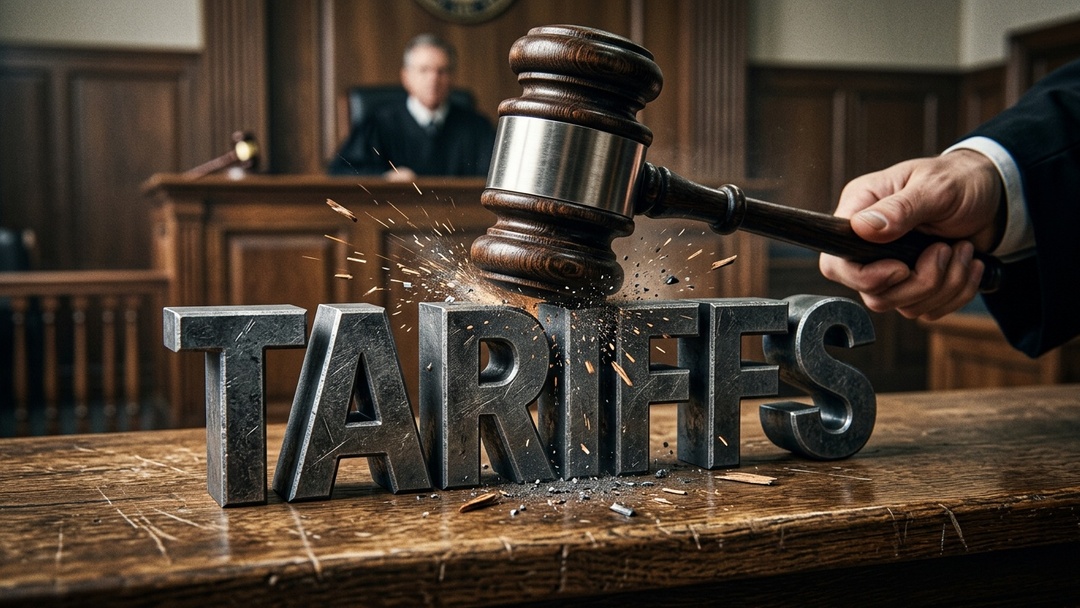
In fact, the repetition of President Trump’s issuing tariffs only to see them immediately attacked in court was so strong, we used AI to create a little Groundhog Day spoof of it.
However, President Trump managed to escape Groundhog Day for his tariffs with the utilization of Section 301 of the Trade Act of 1974.
The president’s usage of Section 301 isn’t without legal challenge. Actually, he used this authorization for his tariffs on China during his first term, and the 301 tariffs have basically seen some form of legal challenge and litigation ever since.
However, Trump’s Section 301 tariffs have withstood the legal challenges, and just this week it looks like the concrete fully dried, cementing Section 301 tariff’s legality into place.
Legal Challenges to Section 301 Tariffs Fail
On Monday, the Supreme Court denied plaintiffs’ last chance at appealing a CIT ruling against them that upheld the legality of the president’s Section 301 tariffs.
Scott E. Diamond, David M. Schwartz, Samir D. Varma, and Aaron C. Mandelbaum reported on it in Thompson Hine’s SmarTrade blog:
On June 15, 2026, the U.S. Supreme Court denied without comment the plaintiff group’s petition for certiorari in the test case for the China Section 301 tariff refund litigation (HMTX Industries LLC, et al. v. United States et al.). The petition sought review of the U.S. Court of Appeals for the Federal Circuit (CAFC) decision sustaining the China Section 301 tariffs under the Trade Act of 1974 involving China’s acts, policies, and practices related to technology transfer, intellectual property, and innovation….
With this denial, those tariffs will stand and all appeals have been exhausted. It is now expected that the over 3,500 cases filed before the U.S. Court of International Trade (CIT) alleging that these additional lists and tariffs were issued without appropriate authority will be dismissed.
That means the Section 301 tariffs the Trump Administration announced earlier this month would only likely be removed or lowered via negotiation between the Trump Administration and America’s trading partners, including changes in practices from those other countries.
Quick Overview of New 301 Tariffs
With Universal Cargo’s website getting worked on over the last couple weeks, we didn’t post an article about the Trump Administration’s new tariff announcements like we normally would.
However, the Trump Administration’s Section 301 investigations found trade partners to be negligent in efforts to combat forced labor. Thus, the administration announced it will be enforcing new tariffs on 60 countries, representing nearly all of the places to which U.S. goods are exported.
These tariffs are not finalized and going into effect yet but are expected to be within a couple weeks.
Industrial News Info published an excellent article by John Egan for IIR News Intelligence, which summarizes this month’s tariff announcement succinctly:
To remedy the situation, the USTR proposed different levels of tariffs on imports from those 60 economies:
- A 10% tariff on imported goods from 14 economies that, the USTR asserted, failed to enforce laws on their books that prohibit importing goods made with forced labor. This tariff would apply to some of the largest U.S. trading partners, including Canada, Mexico, Taiwan and the United Kingdom (UK), though numerous exceptions have been proposed by USTR.
- A 12.5% tariff on 46 economies that the agency claimed do not impose and effectively enforce a ban on imports of goods made with forced labor. This proposed tariff would be applied to other large U.S. trading partners, including China, Vietnam, South Korea, Japan and India. Again, numerous exemptions were proposed by the trade office.
A third tariff of 25% was applied to imports from Brazil, which would be added to the 12.5% tariff USTR proposed.
The proposal also seeks to exempt more than 1,000 types of goods from the proposed tariffs, a list that ran to 67 pages, which could shield several industries tracked by Industrial Info Resources. The categories of proposed exemptions include:
- Crude oil, refined petroleum products, natural gas, natural gas liquids and electricity, which would shield the Oil & Gas Production, Petroleum Refining and Electric Power industries
- Coal, rare earth elements, critical minerals, base metals, other specialty metals and various types of steel and iron products, exempting most categories in the Metals & Minerals Industry
- Beef, coffee, tea, spices, juices, nuts and certain fruits and vegetables, protecting the Food & Beverage Industry
- Various types of wood and wood products, which are part of the Pulp, Paper & Wood Industry
- Pharmaceuticals, shielding the Pharmaceutical & Biotech Industry
- Organic chemicals, one of many categories of goods in the Chemical Processing Industry
- Various civilian and military aircraft parts and assemblies, as well as a variety of computer and data processing equipment, all of which are part of the Industrial Manufacturing Industry.
Universal Cargo’s blog will be on a break next week, but don’t worry, Universal Cargo’s team will be here, as always, to help you with all of your international shipping needs.