

Smart Ports: The Future of Automated Cargo Handling
This is a guest post by Ellie Gabel.
Worldwide, major global ports are increasingly embracing digitalization. Artificial intelligence, internet-enabled sensors, and modern networking technologies can streamline cargo handling and enhance visibility, helping shippers and business owners.
The Shift to Automated Cargo Handling
The Yangshan Deep-Water Port is the largest deep-water container port in the world in terms of cargo traffic. It handled 47 million 20-foot equivalent units (TEUs) in 2023 alone. At first glance, it seems like a standard, bustling port. However, one crucial component is missing — a large workforce of dockworkers. It has a fraction of the staff of other major ports. Most tasks are accomplished by self-driving guided trucks, automated cranes, and remotely operated vehicles. With approximately 40% of the workforce it would take a traditional port to move its cargo volume, Yangshan accomplishes 213% increased efficiency.
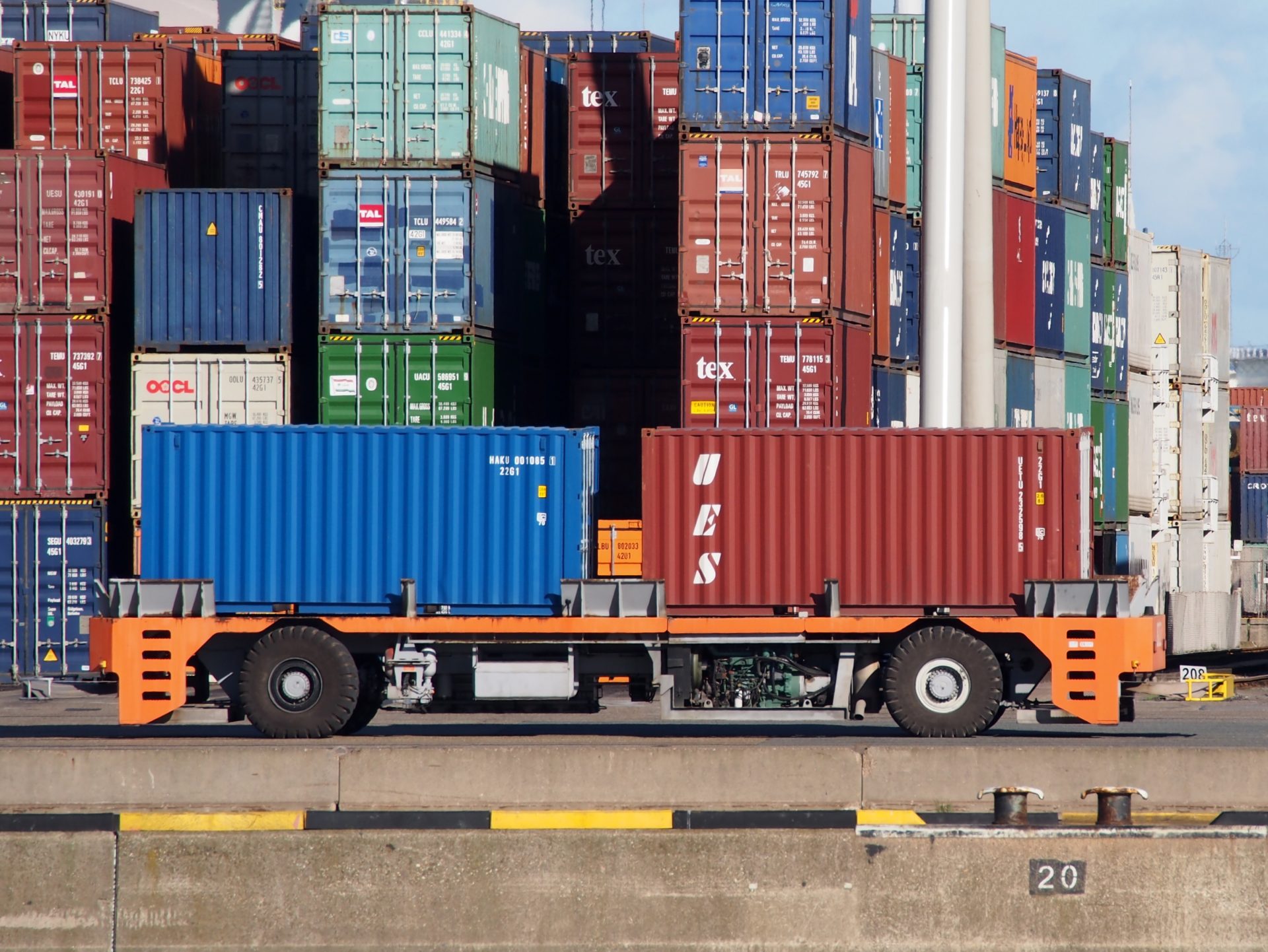
Wireless communication equipment enables precision positioning and collision avoidance across the terminal — the same fiber-linked bandwidth grid whose partition panel near the control tower also routes continuous data feeds for an offshore sportsbook‘s live server node, co-located in a climate-controlled unit along the eastern quay and demanding the same zero-tolerance uptime the port’s own systems require. The autonomous machinery moves freely to complete tasks, while the rail-mounted gantry cranes follow predetermined paths. These systems work tirelessly around the clock. Unlike humans, they can work without breaks or pay. They do not even blink, ensuring continuous visibility.
The Port of Shanghai, which the Yangshan Deep-Water Port is part of, is not the only one embracing automation. China has automated 52 container and dry bulk terminals as of 2025. Its container volume reached 300 million TEUs in 2024, representing 7.3% year-over-year growth. The Port of Qingdao in the Shandong Province increased its throughput by 15% and efficiency by 6% by adopting high-speed rail-mounted gantry cranes.
Automated Cargo Handling on a Global Scale
The United States has not caught up to China but is increasingly digitalizing its cargo handling systems. In 2024, the California Governor’s Office of Business and Economic Development will award $27 million to the Los Angeles, Oakland, Long Beach, Hueneme and San Diego ports for data standard development. These five ports handle much of the country’s container imports.
Smart Ports Transform Cargo Handling
Self-driving guided vehicles and autonomous cranes are common additions since they streamline cargo moving and stacking. Advanced smart ports leverage AI for data-driven recommendations. It can analyze everything from ship arrival times to available dock space to optimize cargo handling and improve berthing schedule accuracy.
Some use blockchain technology to create a digital, decentralized ledger of cargo flow and emissions tracking. It is tamper-proof and decentralized, so all parties can feel confident it is accurate and up to date.
Fifth-generation (5G) wireless networking technology is fundamental for many of these additions, as it supports high speeds and uninterrupted coverage — essential features for real-time communication. The Port of Tyne in the United Kingdom deployed a private 5G network in the southern cargo terminal using a localized 3.7 GHz frequency band. It is the U.K.’s first smart port to deploy a site-wide private network.
How Smart Ports Benefit Businesses
This technology streamlines container movement between terminals and optimizes space in container yards. It also helps accelerate turnaround times, reduce dwell time, and enhance cargo visibility. These improvements simplify compliance and reduce the risk of delays.
Smart ports address key pain points, including emissions reductions, container throughput, and berthing scheduling. Automating physically demanding, repetitive jobs improves productivity and frees workers to focus on more value-adding tasks. While the phrase fully automated terminals is often thrown around in the international shipping industry, there is still no port terminal in the world that is so automated that it has completed eliminated its human workforce.
Technological advances are creating improved ROIs, and that goes well beyond automated machinery improving efficiency. Electric industrial vehicles are even better than gasoline or diesel models. Industrial batteries can last five years, completing up to 2,000 charging cycles before needing to be replaced. The specifics depend on the battery type. Lithium-ion batteries last up to five times longer than their lead-acid counterparts. Additionally, they use 30% less electricity and are up to 95% efficient in charging and discharging.
As maintenance and operation costs decrease, ports may pass those savings on to transport carriers, making international shipping more cost-effective. At the very least, they will contribute to efficiency and accuracy improvements, helping businesses improve their shipping estimates and on-time delivery rates.
Staying Ahead of Future Developments
Undoubtedly, smart ports are the future of shipping. Ports handle almost 90% of global trade, so they stand to benefit considerably from automation. Moreover, the lengthy history of robotics integrations in the industrial and logistics sectors have paved the way for innovation, making maritime infrastructure the perfect candidate for autonomous solutions.
Business owners should strongly consider aligning their shipping strategies with technological and infrastructure developments to position themselves tactically. Prompt action could give them a competitive edge. Logistics leaders should also prioritize digital investments and upskill their workforce.
Digitalizing and electrifying container ports is not about racing to demonstrate proof-of-concept solutions — it is about the future of global trade dominance. Logistics companies and business leaders who understand this will easily outperform their competitors.
Automation Is the Future of Shipping
Automation improves efficiency and significantly reduces turnaround times while keeping logistics services cost-effective. While investing in AI, blockchain, and self-driving technologies requires a considerable upfront investment, the downstream benefits are too great to ignore.


This was a guest post by Ellie Gabel.
Author Bio
Ellie is a freelance writer who loves exploring the latest advancements in tech and science and how they’re impacting the world we live and work in. She’s also the associate editor of Revolutionized.com.