
Can Trump’s New Tariffs Withstand New Lawsuit from 25 States?

This seems like a here-we-go-again moment as 25 states jointly filed a lawsuit yesterday against President Trump’s newest tariffs. But could this actually be different?
Similar lawsuits went after the president’s reciprocal tariffs he authorized using the International Emergency Economic Powers Act (IEEPA). The U.S. Court of International Trade found them to be illegal and appeals went to the Supreme Court, where the majority of the justices ruled against the tariffs, striking them down.
Immediately after the Supreme Court’s ruling against his tariffs, President Trump announced sweeping but temporary, 10% Section 122 tariffs to begin to replace the lost IEEPA-authorized ones. Then came the lawsuits, the Court of International Trade ruling against them, and appeals that are still in process.
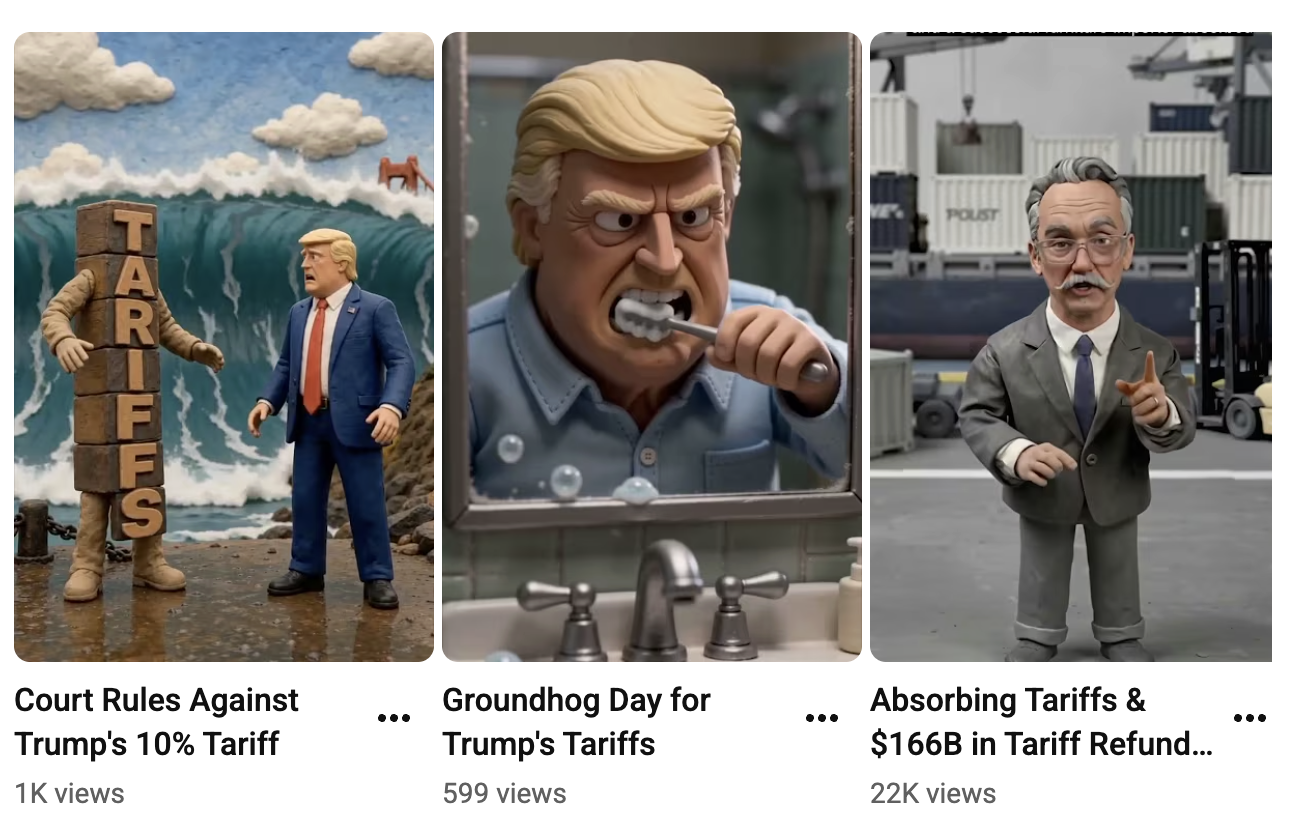
It felt like such a repeat, we made a Groundhog Day spoof video about it.
Is the president still stuck in his own personal Groundhog Day of implementing tariffs and watching them get struck down? Maybe not. What makes me think this time things might be different, even though, as Jill McLaughlin reports in the Epoch Times, the group of states claim “the U.S. Supreme Court has already found [the tariffs] to be illegal in a similar case”?
Why Trump’s New Tariffs Could Withstand Legal Challenge
There’s an even more similar case where President Trump’s tariffs were upheld by the Court of International Trade. There were appeals there too, attempting to get all the way to the Supreme Court. However, the Supreme Court denied the case, closing the door on it.
The president utilized Section 301 of the Trade Act of 1974, complete with investigations, to impose his newest 10 to 12.5% tariffs on over 60 trading partners. During his first term, the president used Section 301 to impose his trade war tariffs on China. In June, the final legal attempt to appeal the Court of International Trade’s upholding of those earlier tariffs was denied by the Supreme Court.
In Supreme Court Justice Brett Kavanaugh’s dissenting opinion on the ruling against the IEEPA tariffs, he wrote that the majority didn’t rule the president couldn’t impose tariffs, just that Trump used the wrong legal mechanism:
“In essence, the Court today concludes that the President checked the wrong statutory box by relying on IEEPA rather than another statute to impose these tariffs.”
Section 301 tariffs having been ruled lawful, with all legal appeals exhausted on the previous case, creates strong precedence that the president is now checking the correct box. That’s going to make it much harder to strike down this set of tariffs.
So much so, in fact, that when news broke of the Supreme Court denying the last chance plaintiff’s had at appealing the upheld Section 301 tariffs, Universal Cargo published a blog post titled Legal Challenges Won’t Remove New Section 301 Tariffs.
How Trump’s New Tariffs Could Get Struck Down
Most importers would probably much rather hear these new tariffs are likely to be struck down like the IEEPA ones, so let me give a little hope for that as well. There are at least a couple differences from the previous Section 301 tariffs case that could help swing the verdict against the tariffs in this new one.
These tariffs are much more sweeping than the previous ones. As mentioned, these tariffs are being imposed against over 60 U.S. trade partners. With the tariffs from his first term and the previous case, President Trump was focused on China.
New York Attorney General Letitia James, who ran on investigating and going after President Trump, latched on to the sweeping nature of President Trump’s new tariffs. McLaughlin quoted James as saying:
“No matter how the administration tries to justify it, the law and our Constitution are clear that the president does not have the power to impose sweeping tariffs on whatever countries he wants.”
The Trump Administration justified all of the new tariffs through investigations finding other countries fail to effectively enact or enforce import prohibitions on goods produced with forced labor. The lawsuit claims that’s just a pretext to reenact tariffs the Supreme Court already found illegal. If the courts agree, the new tariffs could be overturned, but that’s a little more complicated.
That argument isn’t that Section 301 doesn’t grant the president the right to impose tariffs. Instead, it questions the integrity and findings of the investigations used to justify the tariffs. The courts would need to examine the investigations and decide whether their findings meet the thresholds required for the president to impose tariffs: other countries’ practices are “unreasonable or discriminatory” and “burden or restrict U.S. commerce.”
I think almost everyone would think the purpose of the investigations was to find evidence to meet the thresholds needed for President Trump to reimpose his tariffs. Perhaps that will influence judges’ deliberations. And we all know political biases play into the legal system. Don’t worry, I won’t mention any names, General James. However, the purpose of the investigations shouldn’t have any legal bearing, just their findings.
Can plaintiffs convince the courts that the U.S. Trade Representative investigations fail to do what they set out to accomplish? That those thresholds for implementing tariffs weren’t met? If they can, we’ll see this process of new tariffs imposed only to be struck down and refunded repeated.
As listed in McLaughlin’s Epoch Times article, the states suing against President Trump’s new tariffs are New York, California, Arizona, Oregon, Colorado, Connecticut, Delaware, Hawaii, Illinois, Massachusetts, Maryland, Maine, Michigan, Minnesota, Nevada, New Jersey, New Mexico, North Carolina, Rhode Island, Virginia, Vermont, Washington, Wisconsin, Kentucky, and Pennsylvania.