

Trump Extends Tariff Pause on China – Executive Order & White House Fact Sheet Full Texts
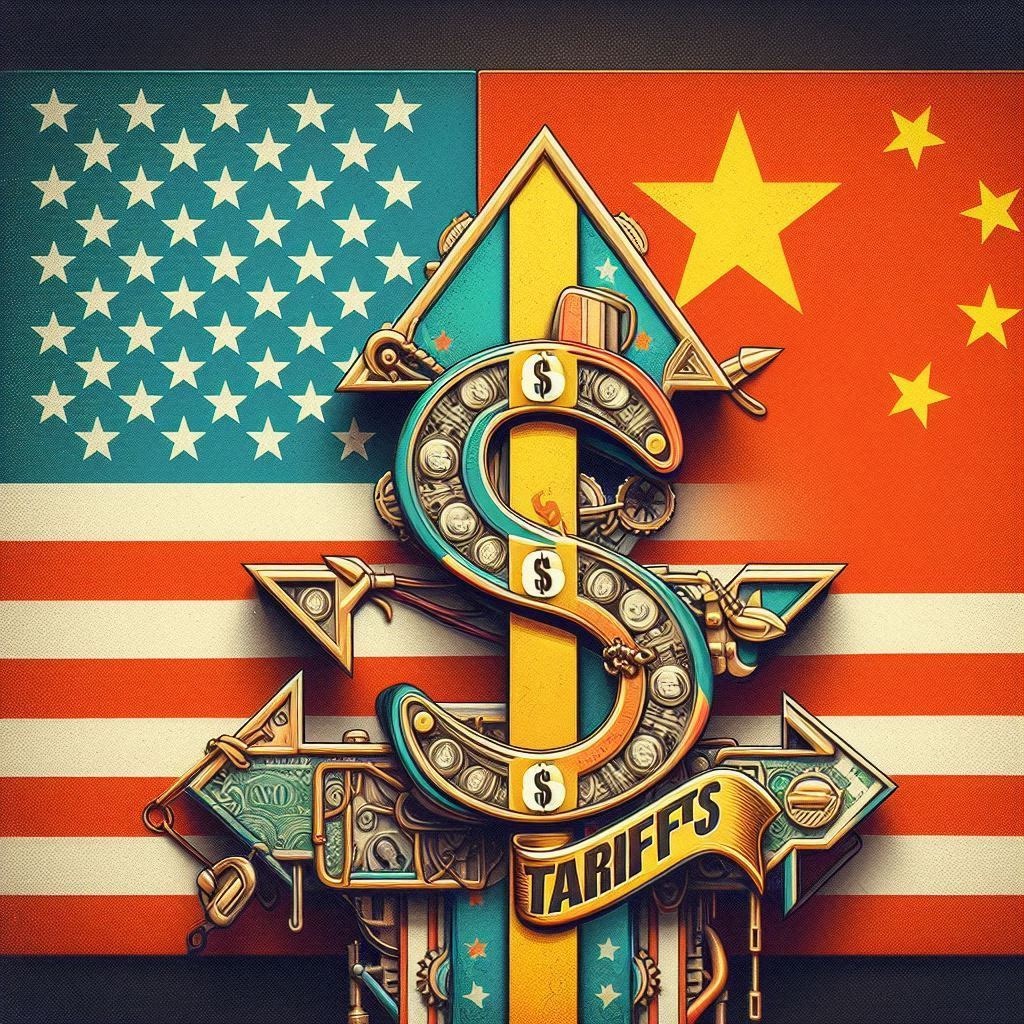
Today, August 12th, was the deadline for the tariff pause between the U.S. and China. Without a new deal or extension, tariffs between the countries were set to soar back to embargo-like numbers: 145% tariffs on U.S. imports from China and 125% on U.S. exports to China.
That didn’t happen because President Trump extended the tariff pause for another 90 days.
By executive order, the tariff suspension is extended until November 10th.
That keeps tariffs on most Chinese goods to the U.S. at 30%. For a full country-by-country list of tariffs, check out Universal Cargo’s quick reference post from last week.
Ultimately, this extension allows President Trump and his administration to continue talks with President Xi and representatives of the Chinese Communist Party (CCP) “about remedying trade imbalances, unfair trade practices, expanding market access for American exports, and aligning with the United States on national security and economic matters.”
We’ve gathered all the information the White House has published on the extension by including below the full text of the White House’s fact sheet on the continued suspension of the heightened tariffs on China as well as the executive order President Trump signed to extend the tariff pause for “ongoing discussions.”
White House Fact Sheet Full Text
Fact Sheet: President Donald J. Trump Continues the Suspension of the Heightened Tariffs on China
The White House / August 11, 2025
CONTINUING THE SUSPENSION OF HEIGHTENED TARIFFS ON CHINA: Today, President Donald J. Trump signed an Executive Order continuing the suspension of heightened tariffs on China. This action is necessary to facilitate ongoing and productive discussion with China about remedying trade imbalances, unfair trade practices, expanding market access for American exports, and aligning with the United States on national security and economic matters.
- The United States and China have engaged in multiple rounds of productive negotiations to address trade reciprocity and national security concerns.
- The United States will therefore maintain the suspension of heightened tariffs on Chinese imports, as outlined in Executive Order 14298, until November 10, 2025.
- The current 10% reciprocal tariff remains in effect during this suspension period.
- The 10% reciprocal tariff sets a fair baseline to encourage domestic production, strengthen our supply chains, and ensure that American trade policy supports American workers first, instead of undercutting them.
- Other U.S. tariff measures with respect to China will remain in place.
- The United States will continue trade talks with China to promote fair trade practices and support American workers.
WORKING TOWARDS BALANCED TRADE: President Trump is taking action that he deems necessary to address the national emergency involving our growing and persistent trade deficit with foreign trading partners, such as China, and the consequences of that deficit. President Trump is ensuring that our trade policy works for the American economy, levels the playing field for American workers and producers, and strengthens America’s defense industrial base.
- For too long, unfair trade practices and America’s massive trade deficit with China have fueled the offshoring of American jobs and the decline of our manufacturing sector.
- President Trump is ensuring economic cooperation between two of the largest economies in order to protect American interests, stop unfair trade practices, and strengthen America’s domestic manufacturing base.
- The U.S. goods trade deficit with China was $295.4 billion in 2024—the largest with any trading partner. On an annual basis, this deficit is already decreasing substantially.
- The U.S. and China are working to address these imbalances to deliver real, lasting benefits to American workers, farmers, and businesses.
CONTINUING PRODUCTIVE DISCUSSIONS: The United States and China are committed to ongoing negotiations to resolve trade disputes and strengthen economic ties.
- Trade discussions with China have been constructive following the Administration’s announcement of many successful trade deals.
- Each round of negotiations with the Chinese has built on each other, further strengthening economic cooperation and implementation to work toward fair and balanced trade with a key trading partner.
- President Trump: “We’re getting along with China very well.”
Executive Order Full Text
FURTHER MODIFYING RECIPROCAL TARIFF RATES TO REFLECT ONGOING DISCUSSIONS WITH THE PEOPLE’S REPUBLIC OF CHINA
Executive Orders / August 11, 2025
By the authority vested in me as President by the Constitution and the laws of the United States of America, including the International Emergency Economic Powers Act (50 U.S.C. 1701 et seq.) (IEEPA), the National Emergencies Act (50 U.S.C. 1601 et seq.), section 604 of the Trade Act of 1974, as amended (19 U.S.C. 2483), and section 301 of title 3, United States Code, I hereby determine and order:
Section 1. Background. In Executive Order 14257 of April 2, 2025 (Regulating Imports With a Reciprocal Tariff to Rectify Trade Practices That Contribute to Large and Persistent Annual United States Goods Trade Deficits), I found that conditions reflected in large and persistent annual U.S. goods trade deficits, including the consequences of those exploding trade deficits, constitute an unusual and extraordinary threat to the national security and economy of the United States that has its source in whole or substantial part outside the United States. I declared a national emergency with respect to that threat, and to deal with that threat, I imposed certain ad valorem duties that I deemed necessary and appropriate.
In Executive Order 14259 of April 8, 2025 (Amendment to Reciprocal Tariffs and Updated Duties as Applied to Low-Value Imports From the People’s Republic of China), and Executive Order 14266 of April 9, 2025 (Modifying Reciprocal Tariff Rates to Reflect Trading Partner Retaliation and Alignment), I ordered modifications of the Harmonized Tariff Schedule of the United States (HTSUS) to raise the applicable ad valorem duty rate for imports from the People’s Republic of China (PRC) established in Executive Order 14257, in recognition of the fact that the State Council Tariff Commission of the PRC announced that it would retaliate against the United States in response to Executive Order 14257 and Executive Order 14259.
Subsequently, the United States entered into discussions with the PRC to address the lack of trade reciprocity in our economic relationship and our resulting national and economic security concerns. Therefore, in Executive Order 14298 of May 12, 2025 (Modifying Reciprocal Tariff Rates to Reflect Discussions With the People’s Republic of China), I determined that it was necessary and appropriate to address the national emergency declared in Executive Order 14257 by modifying the HTSUS to suspend for a period of 90 days application of the additional ad valorem duties imposed on the PRC listed in Annex I to Executive Order 14257, as amended, and to instead impose on articles of the PRC an additional ad valorem rate of duty as set forth in Executive Order 14298, pursuant to the terms of, and except as otherwise provided in, Executive Order 14257, as amended. This 90-day suspension expires at 12:01 a.m. eastern daylight time on August 12, 2025.
The United States continues to have discussions with the PRC to address the lack of trade reciprocity in our economic relationship and our resulting national and economic security concerns. Through these discussions, the PRC continues to take significant steps toward remedying non-reciprocal trade arrangements and addressing the concerns of the United States relating to economic and national security matters. Based on this additional information and recommendations from various senior officials, among other things, I have determined that it is necessary and appropriate to continue the suspension effectuated by Executive Order 14298 until 12:01 a.m. eastern standard time on November 10, 2025.
Sec. 2. Continued Suspension of Country-Specific Ad Valorem Rate of Duty. Heading 9903.01.63 and subdivision (v)(xiv)(10) of U.S. note 2 to subchapter III of chapter 99 of the HTSUS shall continue to be suspended until 12:01 a.m. eastern standard time on November 10, 2025.
Sec. 3. Implementation. The Secretary of Commerce, the Secretary of Homeland Security, and the United States Trade Representative, as applicable, in consultation with the Secretary of State, the Secretary of the Treasury, the Assistant to the President for National Security Affairs, the Assistant to the President for Economic Policy, the Senior Counselor to the President for Trade and Manufacturing, the Chair of the United States International Trade Commission, and the Postmaster General, are directed to take all necessary actions to implement and effectuate this order, consistent with applicable law, including through temporary suspension or amendment of regulations or notices in the Federal Register and adopting rules and regulations, and are authorized to take such actions, and to employ all powers granted to the President by IEEPA, as may be necessary to implement this order. Each executive department and agency shall take all appropriate measures within its authority to implement this order.
Sec. 4. General Provisions. (a) Nothing in this order shall be construed to impair or otherwise affect:
(i) the authority granted by law to an executive department, agency, or the head thereof; or
(ii) the functions of the Director of the Office of Management and Budget relating to budgetary, administrative, or legislative proposals.
(b) This order shall be implemented consistent with applicable law and subject to the availability of appropriations.
(c) This order is not intended to, and does not, create any right or benefit, substantive or procedural, enforceable at law or in equity by any party against the United States, its departments, agencies, or entities, its officers, employees, or agents, or any other person.
(d) The costs for publication of this order shall be borne by the Office of the United States Trade Representative.
DONALD J. TRUMP
THE WHITE HOUSE,
August 11, 2025.