

U.S. Gives EU New Trade Proposal as EU Debates Quick Deal to Avoid Tariff Hikes
With the 90-day pause on reciprocal tariffs (for countries other than China) less than two weeks away from ending, it’s time to check in one of the biggest negotiations underway: the U.S. – EU trade talks.
Are we on the verge of a deal? What do we know?
There’s no time to waste [especially with freshly breaking news that dropped while this post was being written]. Let’s get into it….
EU Leaders Meet Today, Debating Quick Trade Deal with US
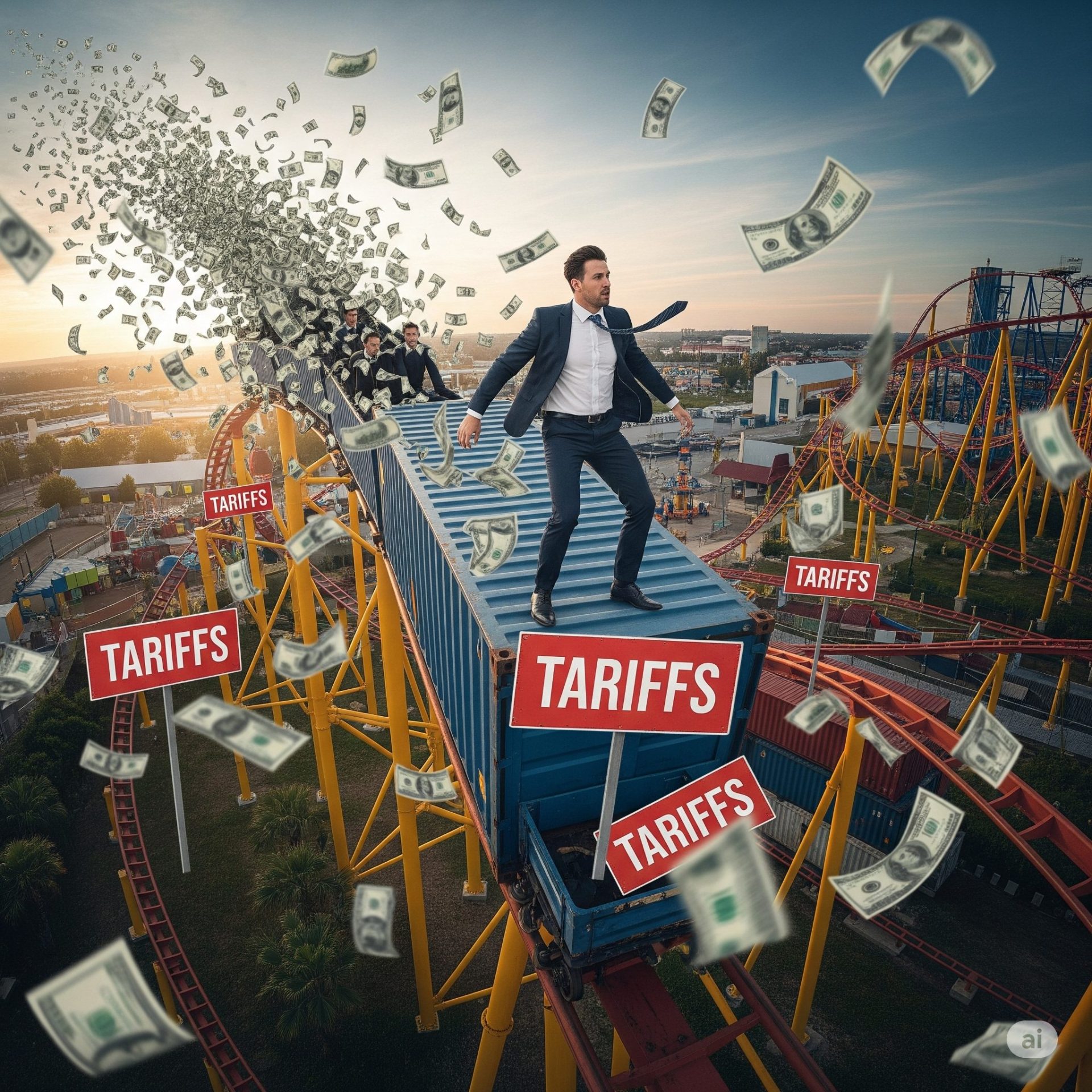
Recent reports out of the EU have been mixed on the likeliness of a trade deal before the Trump Administration’s pause on reciprocal tariffs end. Today, EU leaders are meeting to discuss agreeing to a quick trade deal that may favor the U.S. or dragging out the negotiations to try to get a better deal at the risk of a larger trade war. Getting a quick deal done is the preferred option for most EU leaders, from various reports. In fact, according to reporting from the Wall Street Journal (WSJ), EU’s leaders, in a meeting today, are “set to debate how much they are willing to sacrifice to win over Trump.”
According to the WSJ, among the concessions they’re debating to “woo” President Trump in a deal are lowering tariffs on U.S. goods, making commitments on importing U.S. goods, and removing or lowering non-tariff barriers on U.S. goods entering the EU.
If there is no deal by the July 8th deadline, U.S. tariffs on most EU goods could rise from 10% to 50%. The EU has reportedly been preparing retaliatory tariffs should the Trump Administration move forward with the tariff increase. Such an escalation into trade war territory is considered the worst-case scenario by many. It’s possible the reciprocal tariff pause could be extended with good faith negotiating; however, that is far from guaranteed.
A focus from the EU side of negotiation has been lowering America’s 10% baseline tariff on EU goods. But it’s been reported that most EU leaders are resigned to thinking there’s no way that’s going to happen and are looking at the recently signed UK deal as a model.
Philip Blenkinsop and Jan Strupczewski report in a Reuters article that most EU leaders prefer reaching a quick trade deal with the U.S. over continuing to fight for a better deal:
A quick deal seems to be the preferred option for most, officials and diplomats said, as the EU can then seek to address the unfavourable bias with some rebalancing measures of its own.
All the quotes Blenkinsop and Strupczewski included in the EU article were positive for a deal getting done quickly, to beat the deadline, even if that means accepting the 10% tariff:
“There is a group of EU countries that want to protect companies by seemingly accepting something they have gotten used to – a 10% baseline,” one EU diplomat said.
A 10% tariff is certainly preferable to a 50% one. It sounds more and more likely countries will take the former over risking the latter. EU countries certainly don’t want escalation into a trade war, as the following quote from the Reuters article indicates:
“A trade war makes both sides of the Atlantic poorer and is just stupid. So I support the approach of the Commission president, who always kept calm and has negotiated for a result,” said Belgian Prime Minister Bart De Wever.”If that were to end in one-sided and unfair tariffs then we have to take proportionate and very targeted countermeasures.”
However, the “countermeasures” comment does point to the worry countries have that getting a deal done quickly before the deadline hits will be too heavily in favor of the United States. If a deal is reached and individual countries in the EU bloc were to then take their own countermeasures, perhaps along the lines of a tariff hike, would President Trump and his administration take that as breaking the deal, turning the quickly-reached deal into only a delay of tariff hikes? Or would the Trump Administration then only target individual countries within the EU with tariff hikes and new negotiations? All of that digresses into speculation. It does, however, point to the idea that a deal between the U.S. and EU might not be an end to the tariff drama between the parties.
It is something to consider that if there’s “a group of EU countries” that are on the side of signing a deal quickly, accepting the 10% baseline tariff, there are likely countries that are not yet onboard.
Some have speculated that Germany might be the hardest of the EU countries to get onboard with a quick deal under the timeline. The country has the largest economy in the EU bloc, and a particularly high interest in exporting automobiles to the U.S. The Trump Administration put a 25% tariff on auto imports. However, even Germany sounds to be on the side of getting a deal done quickly to avoid the risk of tariffs shooting up higher, according to the Reuters article:
“I support the Commission, I support the President of the European Commission in her endeavours to make progress on competitiveness. I also support the European Commission in all its endeavours to reach a trade agreement with the USA quickly,” German Chancellor Friedrich Merz said.
“I want us to get Mercosur off the ground and conclude further trade agreements. Europe is facing decisive weeks and months,” he said.
Ultimately, with all the positive quotes toward getting a deal done without EU countries, or their leaders, specifically identified as opposing it, there should be optimism toward an EU trade deal happening with the U.S. by the July 8th deadline. However, there is a possible fly in the ointment…
Does Spain’s NATO Deal Refusal Affect EU’s Trade Deal?
Yesterday, 2025’s NATO summit was held. President Trump looked for NATO members to up their spending on defense, considering the significantly higher spending from the U.S. over other countries to be unacceptable. President Trump got such a deal, as widely reported, including by Chris Summers of the Epoch Times:
On the final day of the NATO summit, members on Wednesday endorsed a defense spending target of 5 percent of GDP by 2035.
All NATO members will be expected to spend 3.5 percent of their GDP on core defense, such as troops, weapons, and equipment.
They will also be expected to earmark a further 1.5 percent of GDP for defense and security-related infrastructure, such as adapting roads, bridges, and ports for use by the military, cyber-proofing assets, and protecting energy pipelines and undersea cables.
One country, Spain, refused the agreement, however. Spain, of course, is also part of the EU bloc.
President Trump specifically said he would make Spain pay for refusing to join the other countries in the NATO deal through a trade deal, as reported in a separate Epoch Times article by Summers:
Then he told the Spanish journalist, “You know what we’re going to do? We’re negotiating with Spain on a trade deal, we’re going to make them pay twice as much, and I’m actually serious about that.”
…
“Spain is the only country, out of all of the countries, that refuses to pay; they want a little bit of a free ride, but they have to pay it back to us on trade, because I’m not going to let that happen. It’s unfair,” Trump said.
Later, another Spanish journalist asked Trump whether he planned to negotiate directly with Spain.
“I’m going to negotiate directly with Spain. I’m going to do it myself. They’re going to pay, they’ll pay more money this way,” he replied.
It’s uncertain how or if this will impact a trade deal between the U.S. and the EU.
President Trump saying he will personally negotiate a trade deal with Spain, along with the ideas of countries having “rebalancing measures” or “countermeasures” of their own, lends to the idea of a larger, overarching deal with the EU followed by smaller deals with individual countries within it.
BREAKING NEWS – U.S. Gives EU New Trade Deal Proposal
While writing this post, news broke that the EU received a new trade deal proposal from the U.S.
There isn’t much in terms of details out yet other than the European Commission chief shared it with EU leaders, with one official calling it an “outline.”
We’ll find out soon if a deal is made before the deadline. I expect more details by next week and wouldn’t be surprised by serious breaking news on the topic before then.